
Taboo by Nigel Halliday
An occasional book review

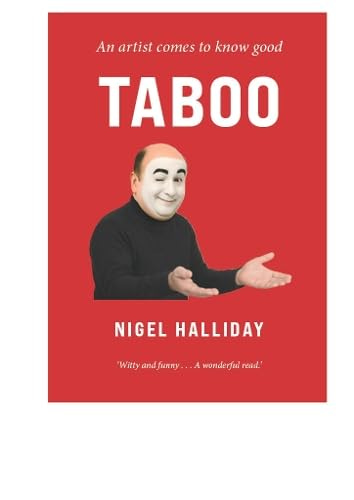
NRVH Books, 288 pages, September 2025 (see here)
This is a searingly funny book written by someone who takes art seriously. Whether he is parodying a position or defending a difficult line, Nigel’s prose dances precisely and with articulate craft, so that the plot rollicks along and drags the reader ever on and in.
The setting is a small, aspirational art college in the North of England, sometime in the nineties or noughties I would guess from the mix of mobile ‘phones and video tape. We follow a group of students through their final year at a time of anarchically negative staff but before most students had folded into the nihilistic pursuit of value-free mark aggregation. These students are thoughtfully aware, and a rebellious minority has a faith.
There’s a refreshing absence of marking schemes and the safeguarding policy appears to have been borrowed from Hogwarts, which clears the arena for freewheeling activism, and entertaining put-downs. If this story makes it into film, it will feature some first-rate physical humour that shies short of slapstick. In between, the witty wording guilds a subversive subtext around what art is and is not there for or whether it needs to be there at all.
Nigel’s cleverest creation is Paul, a lovely lad whose intellectual growth has been stunted by a chronic inability to prepare for anything, to the extent that he is completing three years at an institution which specifically avoids the only type of art training he wants. His failure to read around – before or during his degree – results in a succession of false starts to his final year project, each fatally flawed by the fact that someone else has famously already done it. For this he is mercilessly mocked by his peers and bullied by the staff, one member of whom is enjoying a retrospective exhibition in the local museum and gallery.
His naïve creativity has endeared him to a feisty lawyer who has married him and loves him dearly, too, in between despairing of his inability to defend himself.
These people and their fates are Nigel’s ingredients and under his supervision, they are stirred into interconnected plots, which we’ll leave there for fear of spoiling things when you read them for yourself.
Partial disclosure: I know Nigel and his wife and offered to review this, his first novel. What surprised me was how much time I spent giggling and laughing aloud as I read. Humour is a delicate issue, and it may not tickle you at all, but the last time I enjoyed the fabric of a novel so much was probably with Nick Hornby.
I’d heard Nigel preach, and under lockdown I joined a Lent group he led that used art as a doorway into the season. Neither was perhaps the best exhibition environment for the savage skewering of so many conceits as he lets loose with here: the indolent student; the artist; the haplessly arrogant TV journo. And yet, he switches rapidly to moments of profound pathos: students and staff.
Nigel’s problem is that he isn’t a nihilist: he believes in art and in a Creator beyond art, which means he can’t just throw stones at other people’s glassy souls, however clearly he sees through them. This debut novel is as much a statement of belief – why you can’t believe in nothing or even why you can’t simply debunk the shallower offerings of art – as it is an act of entertainment. Which is why he switches from laughter to tears with such poignancy and regularity.
Despite the caricatures, everyone is a real person whom he has to care about, and so he shows us the most attractive commitments of his least attractive characters. And the end, when it comes, is beautifully observed, unexpectedly fulfilling and desperately tender.
But don’t take my word for it. Read it for yourself.
Other books reviews in my collection:
When nothing beats anymore (16 December 2024)
A handful of pennies (18 February 2025)
Wonder drug (5 May 2025)
Coming to faith through Dawkins eds. Denis Alexander and Alister McGrath (4 August 2025)
Testosterone by Carole K Hooven (22 September 2025)