
Why British universities struggle
An occasional pedagogical reflection based on 17 years inside


Photo by Matteo Discardi on Unsplash
The short read
From almost any angle, British universities are in trouble. For the doubters:
So, here’s the outline:
What’s wrong?
o Theme 1 – The lack of good value models and the rise of metrics instead
o Theme 2 – The corporatisation of universities and its strategic impact
o Theme 3 – Finance and process – how funding shapes the landscape
Saving the soul of the campus: three proposals.
Now, here’s the long read.
What’s wrong?
In his essay, For everything to stay the same, everything must change (2026), prof serious contemplates why staff morale has crashed to an all-time low. It’s a call to abandon nostalgic longing for the past, live within budget, re-engineer campus and professionalise management.
He runs a university: I’m an outsider who started life in industrial R&D and switched mid-career. My take is:
Today’s metrics are poor and expensive. Without better value indicators, universities can only chase numbers.
A corporate model has been hastily adopted, with a rise in managers and accountability systems. Expanding centres, increasingly detached from main campus, make poor decisions.
Peculiar funding mechanisms add complexity, leaving universities with arcane processes ripe for renewal
I see government policy and the rise in student numbers as factors which could have gone either way. As it is, and like Covid, they have usually ratcheted up the woe.
Now let’s turn to those bullets...
Value and purpose
Our ancient universities are centuries old – even Glasgow’s charter dates from 1451 – while Redbricks go back more than a century.
Inventors in the new industrial age needed engineers and so they established training institutions, which got swept into Redbricks. In Birmingham for instance (my alma mater), an industrial-philosophical diner’s club, the Lunar Society, met on the full moon for the last third of the eighteenth century until streetlights arrived in the nineteenth.
Money flowed from this cultural mix when Sir Josiah Mason founded Mason Science College in 1875, later part of the University of Birmingham, the first redbrick which received its charter in 1900.
So, is the value in learning or earning or both?
For centuries things muddled along on a mix of patronage and symbiosis, but the explosive growth of the post-war 20thcentury needed calibration. As the Research Excellence Framework (REF, originally RAE, 1986) gained traction, I heard a lot about being research led. Later, with the National Student Survey (NSS, 2005) and the Teaching Excellence Framework (TEF, 2015) which arrived as I was leaving, the pendulum swung towards teaching and students.
Metrics shape sectors but my problems are:
Chasing numbers is not the pursuit of value. Few metrics track the flow or mastery of knowledge directly, and even natural metrics such as citations take on a life of their own once they become a sectoral surrogate for success.
Accurate measures take time to mature. The 17-year lag for health technology (click here) or the time it takes students to settle in a career means you’re always measuring where universities were almost a decade ago.
There’s too much gaming. For instance, it’s hard not to associate the quadrupling of firsts from 7% to 28% (1995-2017) with ‘good’ degrees being factored into some league tables or the NSS asking students about grades.
These measures are highly bureaucratic and consume huge amounts of effort. Worse still, what a bureaucracy can measure (produce forms for and set deadlines for, etc) doesn’t correspond to the underlying value mechanisms or timescales.
And so, I’m highly sceptical of the methods and the numbers that emerge.
The economists might succeed here – perhaps with a parallel to healthcare’s QALY (Quality Adjusted Life Year) – that focuses on benefits, institutions, students and society (see, Times Higher Education, 2016).
The corporate campus
Business has an easy proposition – profit or perish – and has mastered it well.
It’s not that business is particularly endearing (think, Post Office, Water Companies...) or enduring (the world’s 5 biggest companies are much younger than our Redbricks).
Nonetheless, the corporate model has entranced the sector, with more central decision-making (click here), rising salaries, and a tsunami of management roles and administrators, up 60% between 2005/06 and 2017/18 (click here).
As I see it:
The centre has become increasingly detached from the campus, buffered by managers and administrators who mediate numbers to the top.
This has created a bubble around highly empowered people who see the world through its roseate and risk-protecting membrane but also through the eyes of those in other bubbles.
Where the quest is for knowledge rather than cash, the corporate model fails.
And so it has proven! Moreover, the spell was amazingly consistent – everybody went after more or less the same things at more or less the same times if they could.
Had universities been offering an agile product, this might have worked but they are in a frantically long-term business.
Example 1: focusing on teaching students v student numbers
While governments have been increasing student numbers, two important decisions were in the hands of universities themselves: the transformation of student accommodation into healthy income streams; and the number of overseas students.
Within a VC’s lifetime (typically 3-5 years), a student tower block looks great: ensuite luxury replaces manky rooms and satisfies demand. Moreover, demand was buoyant and offers looked good! Independent contractors often funded projects, managed facilities afterwards, and handed universities a profit.
However, universities had to guarantee occupancy levels which distracted their downstream focus. So when demand slackened, they admitted cohorts they weren’t used to teaching, which hit universities that would have taken those students.
Another bonanza was overseas students who pay a premium, where numbers rose from fewer than 50,000 a year in the ‘70s, to more than half a million by 2020. Numbers have fallen dramatically, but income to the sector peaked around £12bn in 2023/24.
Universities became dependent on this and many were left helpless as these fees dried up. The boom outlasted most VCs but couldn’t last forever.
Example 2: Technology adoption
Digitising the campus could have transformed teaching and learning. With others, I experimented with an early VLE (Virtual Learning Environment) to track student attendance and engagement in the classroom and in personal study (Macredie et al, 2022). We could offer targeted encouragement, gamify progress, discover how students were learning and when they were studying. We sculpted our pedagogy accordingly.
However, VLEs are expensive, with the UK market in licences worth ~£100M pa, so it’s a campus decision. The catch is that VLEs can also monitor staff as they teach; and what the centre pays for, the centre gets.
So, campus pendulums have swung from student support toward tracking compliance.
Example 3: management training
I completed GEC’s Senior Development Programme (SDP) and the Top Management Programme (TMP) for Higher Education.
SDP was thorough with a psychometric test and 360° questionnaires that demanded frank answers with examples to justify them. It had a clear goal: to identify weaknesses that held you back and so unlock your onward career. I found it stretching and tough.
TMP was collegial and relaxed, with stimulating visits and interesting speakers. Most delegates were already in top management, and they were fun to talk to. I got good advice and a helpful support group, but I wasn’t fundamentally challenged.
Without better designed management development pathways, it’s hard to see things improving.
Finance and process
Money drives almost everything in the corporate world. I found that the academic mind often sees what it wishes to achieve and how it will pay for it as separate issues. So, wherever I looked, causality shimmered in abeyance: you spend; you get results; but rarely see a clear connection.
Whether we are talking RAMs (Resource Allocation Models) or the convoluted world of FEC (Full Economic Cost) where research councils only pay 80%, the rules are arcane and arbitrary. Since I was running a surplus of a few hundred thousand pounds in an industry sponsored account, I managed to persuade the CFO to share the accruing interest with me – which he did! But business thinking like that is rare.
This warps what you think you can do. Even such interventions as fee caps have proved disastrously naïve as the ceiling became the going rate and price differentiation was wiped out.
And so, mergers and chasing numbers became the safest game in town while the strategic imperative – process reengineering – got kicked down the road. Think, ICI in the ‘80s deciding the Grand National was a better bet than R&D.
One last challenge, here: you never know what the government will do next or what fines it will levy for what real or imagined sins.
Bottom line: we don’t have a new model of higher education. This, despite having just lived through a time of opportunity as new technologies emerged coupled to severe need as Covid and the loss of overseas students stressed the system.
Recovering its soul
The campus needs its soul back, not just restored self-determination or self-respect.
I suggest:
Get a grip on value
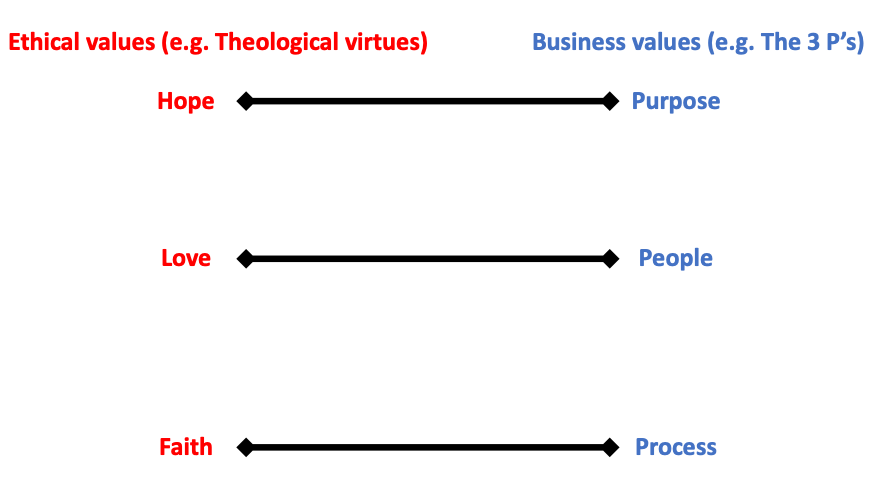
Let’s restore hope by quantifying purpose in a way that can be readily measured and works across society.
If economics doesn’t deliver, value stream engineering, that transformed 20th century industry might work. Womack and Jones’ Lean Thinking is thorough, while Ohno’s Toyota Production System is thoughtful.
Fun fact: a Technical Director once told me that Lean was the jewel BAE Systems gained from having owned Rover Group (click here for the history). It’s quirky, isn’t it? A dying car company infecting an evolving aerospace giant with a good virus. Value really is king.
The trick is religiously to follow each step on campus – student experience, say – and ask repeatedly what value gets added, what activity is value-neutral, and where value is being destroyed (students dropping out, for instance). This forces you to conceptualise value in the moment instead of seeking it later through a traditional assessment exercise.
It took industry decades and is not a quick fix for universities. But it works.
Select and train leaders more professionally
With trust eroded, and morale perhaps at an all-time low, we need to focus on relationships. Counterintuitively, academic collegiality was based not so much on love of neighbour as other loves – communities, conferences, students – and excellence was an accidental byproduct.
And so, we need better leadership for this unusual mix. For me, this means we must:
Work out what skills are needed and ensure all leadership candidates can acquire them.
Design pathways that expose candidates to real risks they must manage to survive
Build systems that need and thrive on genuine teamwork
I like split careers. You get two sets of training, the only drawback being the few years of career development lost in the transition. Arriving from industry, what I had (old papers, patents, corporate income generation, managing teams and consortia) didn’t count in my new world and what counted (research council grants, papers published within the REF window, pedagogical pedigree) I hadn’t yet got. I was recruited as an act of faith.
Let’s try to move from occasional acts of faith to embedded career development systems.
Cut bureaucracy, re-engineer processes
As it develops, AI should help with the former by gobbling up reams of reportage and drafting returns.
What about teaching? Well, content is free in the internet age (click Times Higher Education, 2021), so let’s stop lecturing content! Meanwhile, I propose (watch Getting Started this Autumn) that instead of creating content, academics should curate it in this sort of cycle:
Personal study alone or in groups, using compelling material
Academic-led discussion to develop a reflective grasp of the subject
Stretching assessments that build understanding as students demonstrate their competence
I believe teaching costs could be cut by a third to a half and have published a little analysis:
A new business model for the business school (EFMD Global Blog, October 2020)
An industry-style focus on teaching costs is vital to survive the pandemic (Times Higher, September 2020)
Research is harder to streamline, especially that innovative spark, but there is plenty of paperwork that AI-backed teams could certainly tackle better than the mix of heroes and strugglers to whom it is currently left.
In summary:
Purpose: get a better value proposition!
People: professionalise the senior development pathways
Process: cut bureaucracy and re-engineer at scale.
It needs imagination and will require massively cross-disciplinary teams.
But where are there more eclectic or wide-ranging skill sets than on campus?
PS
I enjoyed my 17 years as a professor. I didn’t achieve much of what I’d hoped, but met plenty of interesting people, learned a lot and came to admire many of my colleagues.
I’m not against academics earning high salaries, particularly in research and teaching, nor am I against gaming, per se. I don’t think universities game their problems out enough.
This post is an experiment to see if I can produce quicker and better posts. I’ve collaborated with Nathan Young who fact checked using an AI engine – claude or one of its mates. I showed prof serious a draft, who recommended cutting back on the problem sections and expanding the soul saving. So, thank you! All errors are mine.
Finally, the framework from my very first post, Ethics and business: a connecting Framework (2024) has helped structure my thinking.
My deep dive series
Reflections on Higher Education 1: what’s up? (24 October 2024)
Reflections on Higher Education 2: my deep dive into research (31 October 2024)
Reflections on Higher Education 3: my deep dive into teaching and learning (7 November 2024)
Reflections on Higher Education 4: are we killing geese to get their golden eggs? (14 November 2024)
Reflections on Higher Education 5: the mixed academic economy (21 November 2024)
Reflections on Higher Education 6: squaring circles (28 November 2024)